
"Read the following scenario and select the best answer."
That sentence appears in thousands of healthcare eLearning modules. And it almost always introduces a multiple choice question, not a scenario. The learner reads a paragraph about a fictional patient, picks from four options, gets told they're right or wrong, and moves on. Nothing changed. No decisions had consequences. No pressure was felt.
That's not scenario-based learning. That's a quiz with a backstory.
What a Scenario Actually Is
A real scenario puts the learner inside a situation where they have to make a decision without knowing the outcome. The decision leads somewhere. That somewhere leads to another decision. The path branches based on choices, not on right-or-wrong answers.
The critical difference: in a quiz, the learner is evaluating options. In a scenario, the learner is living consequences.
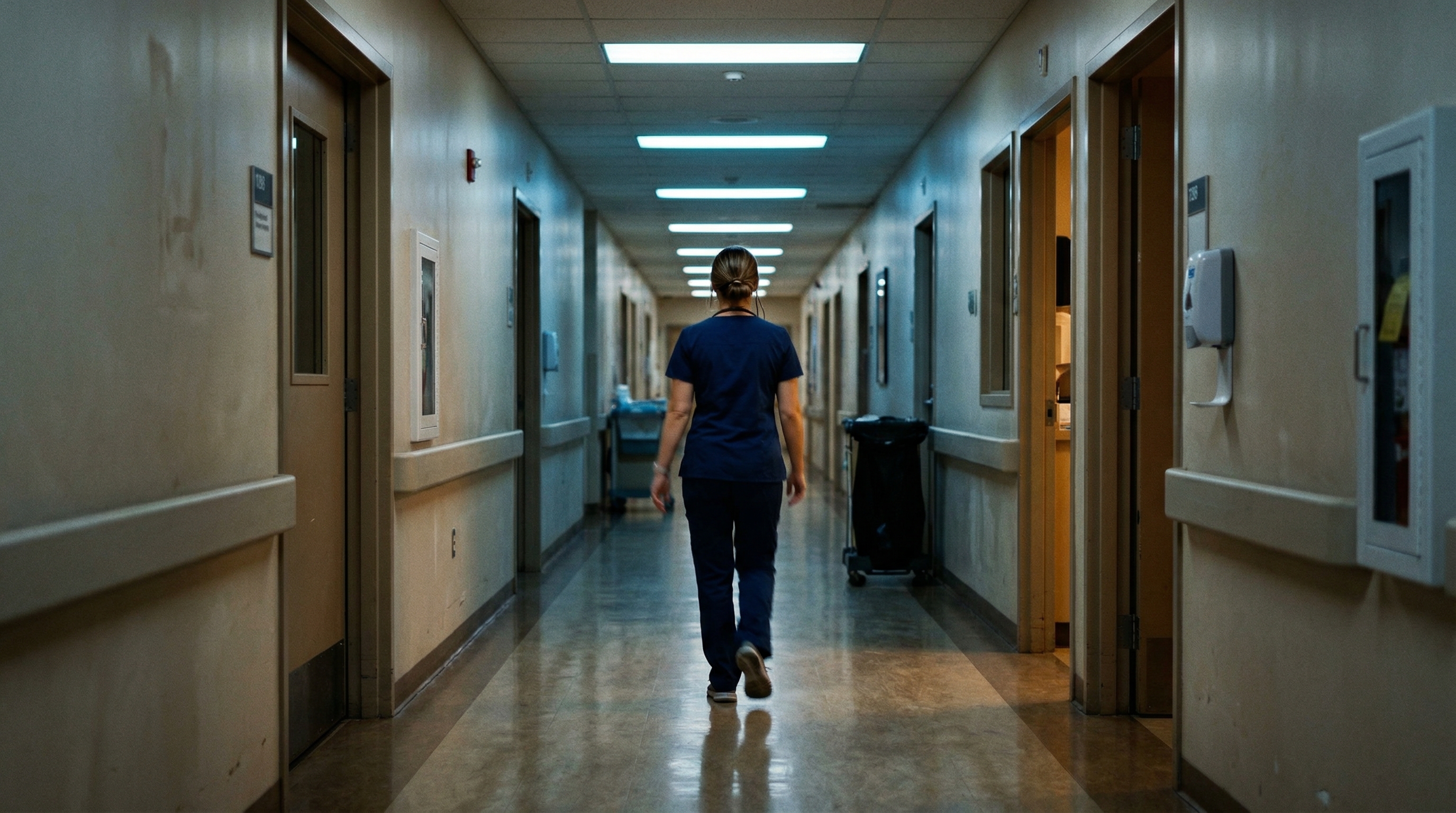
A nurse in a real ward doesn't get four options to choose from. She assesses vital signs, decides whether to escalate, makes a judgement call with incomplete information, and lives with what happens next. The training should mirror that cognitive process, not replace it with a guessing game.
In a quiz, the learner is evaluating options. In a scenario, the learner is living consequences.
The Consequences Problem
Most healthcare scenarios fail because wrong answers have no weight. The learner selects the incorrect option, gets a red banner that says "Incorrect - the correct answer is B," and continues as if nothing happened.
In reality, the wrong decision has consequences. The patient deteriorates. The family asks questions. The incident report triggers a review. There's emotional weight, professional weight, and time pressure - none of which exist in a standard quiz format.
Effective scenario design doesn't punish the learner. It shows them what happens. "You chose not to escalate. Four hours later, the patient's condition has worsened. The registrar asks why you didn't call earlier. What do you do now?"
That's a scenario. The learner isn't told they're wrong. They're experiencing what wrong feels like.
The Information Drip
Good clinical scenarios don't give the learner everything upfront. Real clinical situations unfold over time. The patient presents with one set of symptoms. New information emerges. The picture changes. The learner has to update their thinking, not just recall a fact.
This means designing the information flow deliberately. What does the learner know at decision point one? What new information arrives at decision point two? What's the red herring that tests clinical judgement versus pattern matching?
The goal isn't to trick the learner. It's to replicate the cognitive challenge of clinical decision-making, where information is incomplete, time-sensitive, and sometimes contradictory.
The Minimum Viable Scenario
You don't need twenty branches to build a real scenario. You need three decision points where the path genuinely changes, at least one consequence that shows the learner the impact of their choice, and an information reveal that forces the learner to reconsider their initial assessment.
Three decisions. One consequence. One twist. That's a scenario.
Your clinical scenarios should feel like decisions, not exams. That's the standard.

Nic