
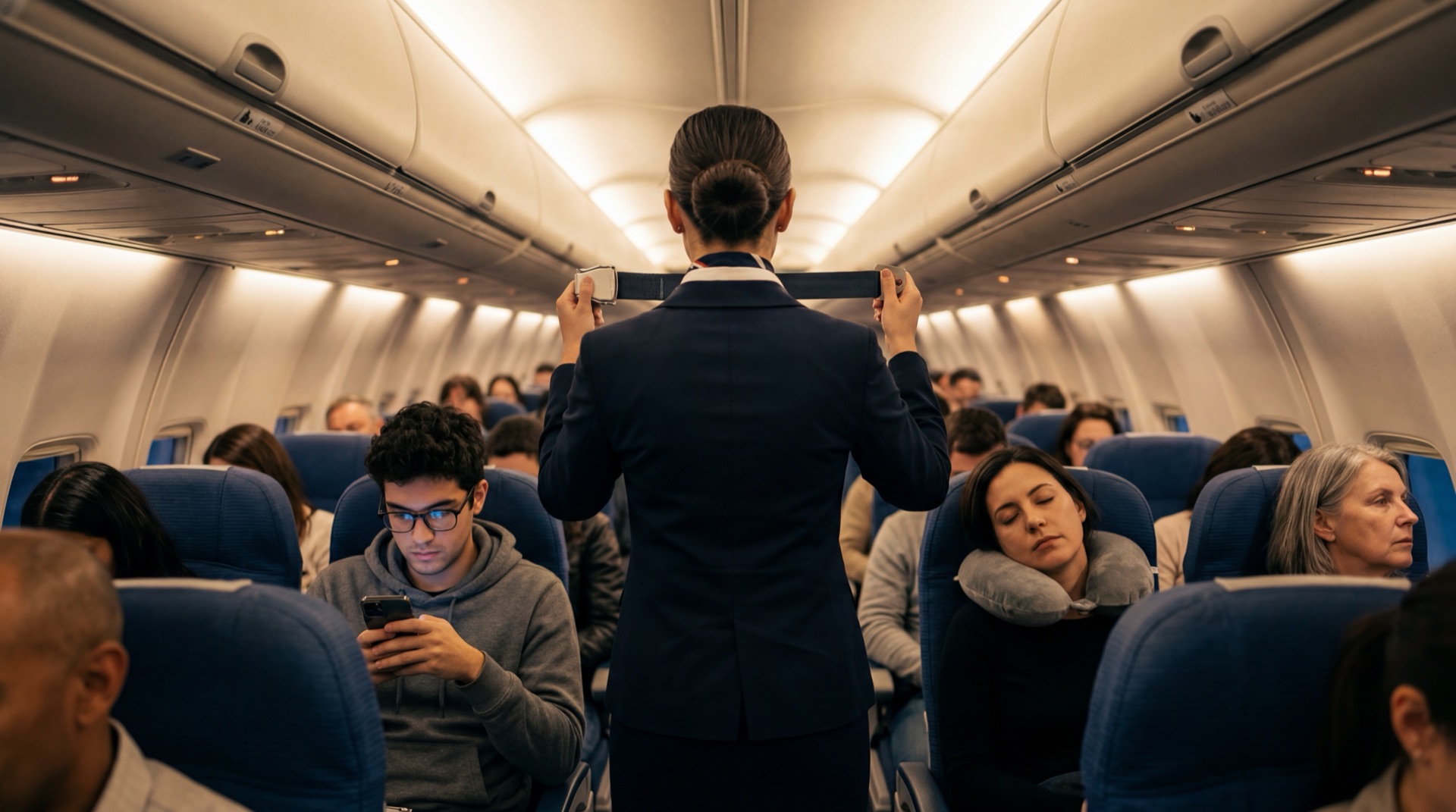
I was on a flight last week. Somewhere between boarding and the seatbelt sign, a cabin crew member stood in the aisle and started the safety demonstration.
I watched for about three seconds. Then I went back to my phone.
So did everyone else. The entire plane - maybe 180 people - collectively decided that the information designed to save their lives wasn't worth their attention. The flight attendant kept going anyway, pointing at exits that nobody was looking at, demonstrating a life vest that nobody was watching.
And it hit me: this is the exact same problem I solve for a living.
The Compliance Trap
Every organisation has its version of the pre-flight safety briefing. Fire warden training. Manual handling. Code of conduct. Cyber security awareness. The content is genuinely important - but the delivery has trained people to tune out before it starts.
Why? Because the format signals "compliance" before a single word lands. The same script. The same monotone. The same information delivered the same way, every single time. Your brain learns to categorise it as noise.
The problem isn't the content. It's that the delivery has taught the audience not to listen.
What the Airlines Actually Figured Out
Here's the interesting thing. Some airlines cracked this years ago.
Air New Zealand put hobbits in their safety video. Delta turned theirs into an 80s music video. Virgin used animation. They understood something that most L&D teams still haven't: when the format is predictable, attention is gone before you open your mouth.
They didn't change the information. The regulations are the same. Exit locations, brace position, life vest under the seat. What they changed was the pattern interrupt - the moment where your brain goes "wait, this isn't what I expected" and re-engages.
That's the whole game.
The Uncomfortable Parallel
Think about the last compliance module you sat through at work. The click-next slides. The stock photos of diverse people pointing at whiteboards. The mandatory quiz at the end that everyone answers from memory of the pattern, not the content.
Same dynamic. The format has become so predictable that people develop antibodies to it. They learn how to pass without learning.
You haven't trained anyone. You've just documented that you tried.
And here's what makes it worse: the people commissioning this training genuinely believe the content matters. They're right - it does. But if nobody's actually absorbing it, the training is just evidence of intent, not evidence of learning.
Pattern Interrupt Is Not a Gimmick
When I build eLearning, one of the first things I think about is: where will attention switch off? Not because the content is boring, but because the format is telling the learner's brain "you've seen this before, you can check out."
The fix isn't adding more animations or gamifying everything. It's breaking the pattern at the moment attention drops. A scenario where the learner has to make a real decision. A question before the content, not after. A consequence that mirrors what would actually happen on the job.
Air New Zealand didn't make their safety video entertaining for fun. They made it entertaining because the alternative was a plane full of people who had no idea where the exits were.
The Real Measure
Next time you're designing training - or sitting through someone else's - ask yourself one question: if there were an actual emergency right now, would anyone in this room know what to do?
If the answer is no, the training hasn't failed because of bad content. It's failed because the delivery taught people it was safe to stop listening.
The exits are here, here, and here. But only if someone's paying attention.

Nic